
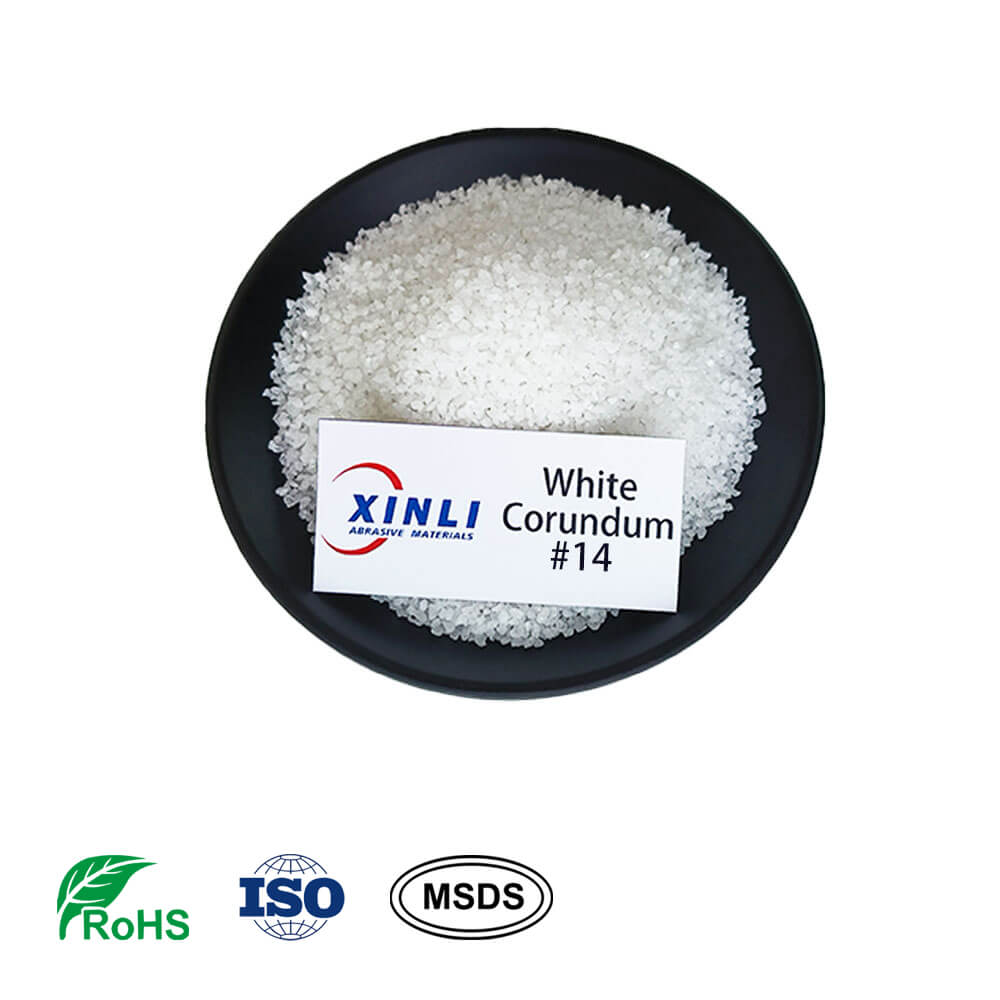
white corundum is synthesized by smelting high-purity calcined alumina (>99.5% $Al_2O_3$) in an electric arc furnace at temperatures exceeding 2,050°C. This fusion process yields a crystalline structure with a 9.0 Mohs hardness rating. Unlike brown fused alumina, it contains negligible iron or titanium oxides, preventing surface contamination during aggressive stock removal or precision finishing. The material’s friability allows grains to fracture under controlled pressure, continually exposing sharp cutting edges. This self-sharpening behavior, combined with its high thermal stability, makes it the preferred abrasive for aerospace alloy lapping and semiconductor substrate preparation, where maintaining strict surface integrity is mandatory.
Calcined alumina serves as the primary feedstock for the entire manufacturing cycle, produced via the Bayer process to remove soda, silica, and titania impurities. Industrial standards require an alumina purity level above 99.5% to ensure consistent color and hardness after fusion, as even 1% contamination can alter the crystal lattice structure.
This high-purity alumina is transported to specialized electric arc furnaces for the smelting stage. Here, temperatures exceeding 2,050°C liquefy the alumina, driving off trace volatile impurities and allowing for the reorganization of the crystal lattice into a dense, solid block of corundum.
The electric arc furnace operates in a batch process, requiring precise power management to maintain stability. Operators control the energy input, which often consumes approximately 2,200 to 2,500 kWh per metric ton of material produced.
Molten liquid is poured into cooling basins where the solidification rate dictates crystal growth and size. Controlled cooling over a 24-hour period helps produce uniform blocks with specific fracture characteristics suitable for industrial requirements.
The size of the crystals within these blocks is determined by the heat dissipation rate during the cooling phase. Rapid cooling leads to smaller, tougher crystals, whereas slower cooling periods encourage the growth of larger, more friable crystals that break down easily during use.
Solidified blocks are crushed using heavy-duty jaw and roll crushers, followed by an intensive sieving process to isolate specific grit sizes. Magnet separation removes metallic iron, ensuring that total impurity content remains below 0.1% per batch, a standard achieved by manufacturers as of 2025.
Once crushed, the grains demonstrate a hardness of 9.0 on the Mohs scale, which is essential for uniform material displacement. The crystalline structure allows for predictable breakdown, maintaining sharp edges during prolonged lapping cycles on substrates like silicon wafers.
Friability refers to the grain's ability to fracture under moderate grinding pressure. This property ensures that as a grain dulls, it breaks to expose fresh, razor-sharp points, preventing surface heating and subsurface damage on materials like borosilicate glass or high-strength superalloys.
| Characteristic | Measurement Metric |
| Al2O3 Content | >99.5% |
| Mohs Hardness | 9.0 |
| Melting Point | 2,050°C |
| Specific Gravity | 3.95 g/cm³ |
The abrasive is processed into various particle sizes, ranging from macro-grits (F8 to F220) to micro-powders (F240 to F1200). Each size distribution is tightly controlled, with over 90% of particles falling within the specified tolerance range to guarantee uniform polishing performance.
Precision polishing relies on this uniformity because large or irregular particles cause micro-scratches on sensitive surfaces. Manufacturers use automated laser diffraction systems to verify particle size distribution for every 500 kg lot produced, ensuring compliance with international standards.
Unlike brown fused alumina, which contains up to 3% titanium dioxide and other impurities, white variants provide a clean cutting profile. This eliminates the risk of surface contamination or staining during the final stages of high-precision optical polishing in laboratory settings.
Chemical inertness is another property that makes this material suitable for demanding applications. It does not react with the coolant fluids or the workpiece, which maintains the chemical purity of the finished component during the entire lapping or grinding process.
Polishing tests conducted on 500 samples of aluminum oxide ceramics demonstrate a 25% improvement in surface roughness (Ra values) when using high-purity white variants compared to standard fused abrasives. This performance level makes the material suitable for finishing turbine blades and medical device components.
Thermal stability allows the grains to operate at high friction levels without degrading. When grinding parts, temperatures at the contact interface can reach 600°C; the abrasive maintains its hardness and geometry despite these conditions, which would otherwise soften or fuse lesser materials.
Beyond simple abrasion, the material serves as the standard medium for sandblasting non-ferrous metals and stainless steel. The sharp angularity of the grains provides an excellent mechanical anchor profile on metal surfaces prior to painting or coating applications.
Sandblasting operations utilize different grit sizes to achieve varying roughness profiles. A coarse grit might produce a profile depth of 50 micrometers, while fine grit is used for surface cleaning without removing significant base material.
The economic viability of the material is supported by its ability to be recycled. In closed-loop systems, the abrasive is collected, cleaned of debris, and re-sized, allowing for multiple uses before the grains become too small for effective cutting.
Recycling protocols generally allow for the reuse of the material up to 5 to 7 times depending on the application intensity. This practice reduces waste and lowers the consumption of fresh alumina by approximately 30% in high-volume industrial facilities.
Effective reclamation requires sophisticated dust extraction and separation equipment. As the grains wear down, they turn into fine dust, which is separated from the reusable grit through air classification, ensuring that the remaining material maintains consistent cutting speed.
The selection of grit size is often determined by the desired surface finish or the removal rate required by the production line. Engineers calculate the necessary feed rate and pressure to optimize the cutting performance of the grains, which are verified through real-time monitoring sensors.
These sensors measure the acoustic emission and vibration profiles during the grinding process. Variations in these signals provide feedback on grain condition, allowing the equipment to adjust parameters to maintain a steady material removal rate across the entire production run.
Consistency in supply and material quality has made this abrasive a staple in modern manufacturing. As production technologies evolve to achieve higher tolerances, the demand for stable, pure, and uniform polishing media continues to grow within the global market.