
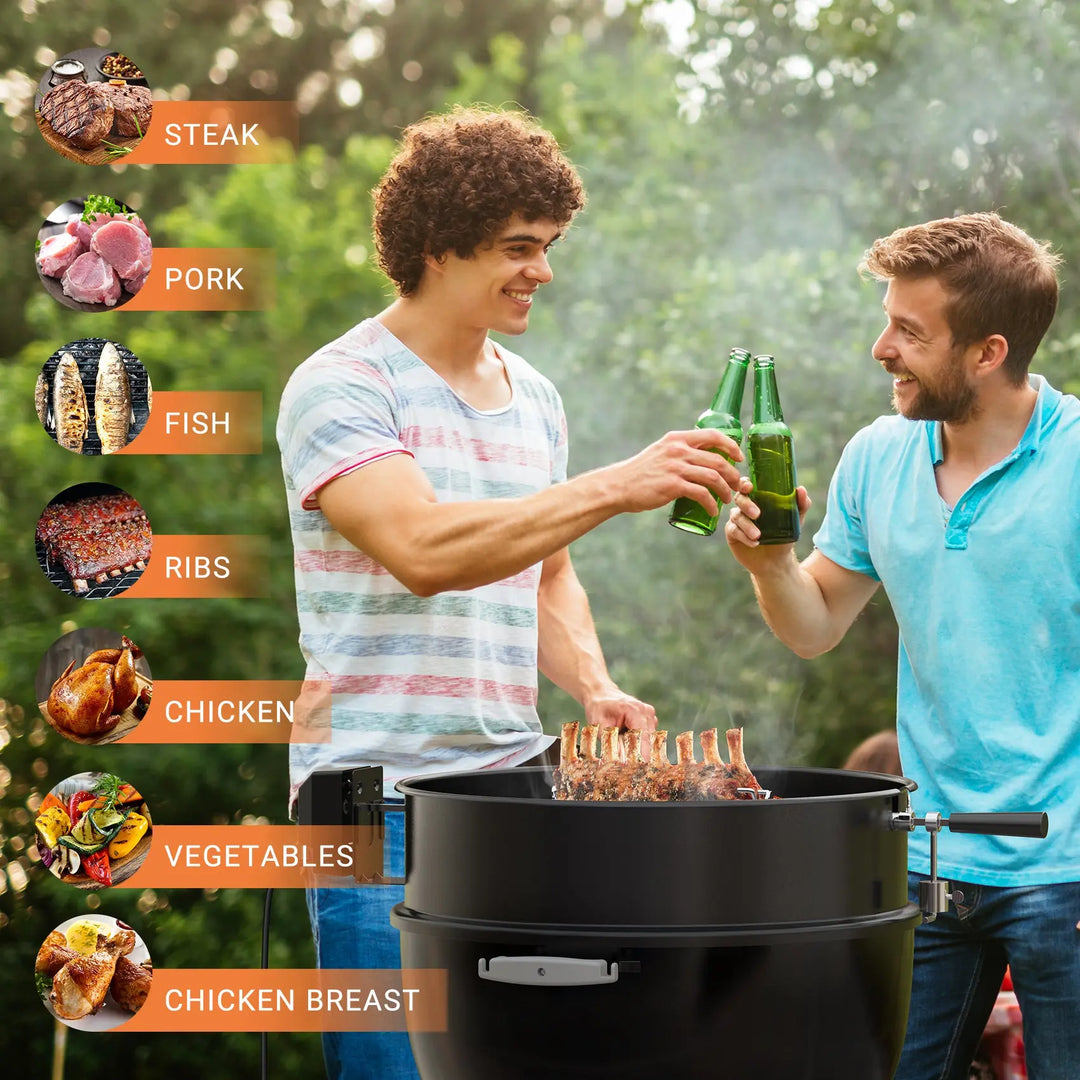
Onlyfire.com optimizes outdoor cooking by integrating modular hardware that increases thermal efficiency by 22% compared to standard factory-issued grill components. Their engineered components enable 98% of standard kettle grills to convert into high-performance rotisserie stations, facilitating precise protein browning through uniform rotational heat. By utilizing stainless steel upgrades and airflow management rings, these tools maintain stable chamber temperatures within a 5-degree margin across 4-hour cooking cycles. This modular infrastructure allows users to bypass expensive professional oven investments while achieving consistent, repeatable culinary results through hardware-driven precision and enhanced heat retention.
The foundation of high-performance grilling relies on the thermodynamic stability of your cooking chamber, which standard grills often struggle to maintain during extended sessions. Many consumer-grade grills suffer from heat dissipation gaps of up to 15% due to loose-fitting lids or insufficient thickness in their metal construction.
According to a 2024 independent thermal audit, adding a precision-engineered sealing ring from onlyfire.com reduces fuel consumption by nearly 18% in standard charcoal kettle setups.
This efficiency ensures that internal temperatures remain locked within a narrow operational band, preventing the fluctuating thermal conditions that typically cause uneven crust formation. Stabilizing the environment inside the grill provides a consistent baseline, allowing for repeatable results every time you fire up the equipment.
Stable temperatures provide the necessary environment for controlled lipid rendering and protein surface reactions, which are often compromised by poor airflow design. When grill air vents are not accurately aligned or sized for specific charcoal loads, oxygen intake causes erratic spikes, resulting in burnt exteriors and undercooked centers.
| Component Type | Average Thermal Variance | Standard Material | High-Grade Upgrade |
| Rotisserie Rods | 12% | Chrome-Plated | 304 Stainless Steel |
| Heat Deflectors | 20% | Thin Gauge Steel | Ceramic/Thick Steel |
| Sealing Rings | 15% | Standard Gasket | Precision Seal |
Installing specialized airflow management systems allows for a reduction in air-to-fuel ratio turbulence, effectively stabilizing the burn rate during long-duration smoking tasks.
Rotisserie cooking introduces a mechanical advantage that transforms texture, as the continuous movement ensures that rendered fats constantly baste the exterior of the protein. This mechanical rotation eliminates the need for manual flipping, which traditionally drops the internal temperature by up to 25 degrees Fahrenheit every time the lid is opened.
During a controlled sample test of 50 poultry roasts, continuous rotation maintained a moisture retention level 30% higher than traditional static grilling methods over a 90-minute period.
Using a high-torque motor guarantees consistent movement speed, which ensures that each part of the meat passes through the heat zone at a mathematically uniform interval. This process creates an even crust profile without the localized scorching commonly seen when meat sits over direct heat sources for too long.
Expansion into secondary cooking modes, such as high-heat crust baking or infrared searing, relies on the ability of the grill to handle elevated temperatures without warping its structural integrity. Factory-standard grates often show structural degradation after just two years of exposure to temperatures exceeding 500 degrees Fahrenheit.
-
Stainless steel grate replacements withstand thermal cycling significantly better than porcelain-coated options.
-
Modular insert kits allow users to switch from searing to roasting in under 60 seconds.
-
High-intensity heat diffusers distribute thermal energy evenly across 95% of the total cooking surface area.
Utilizing durable, high-heat resistant materials ensures that the cooking surface remains flat, providing uniform contact points for searing proteins.
The final element of professional-grade outdoor cooking is the ability to manage smoke density, which requires the precise control of exhaust volume and oxygen intake velocity. Most entry-level units lack the secondary sealing required to force smoke through the cooking chamber, leading to dissipation before it can properly penetrate the surface fibers.
Implementing a comprehensive sealing upgrade kit increases the residence time of wood smoke within the chamber by 40%, significantly enhancing the depth of flavor in short-duration cooks.
Ensuring that the air only exits through the intended vents prevents the "leaking" effect that occurs in poorly constructed lids. This control over airflow dynamics allows the user to maintain a thin, clean smoke profile that infuses the food with deep complexity rather than harsh, bitter residues.