
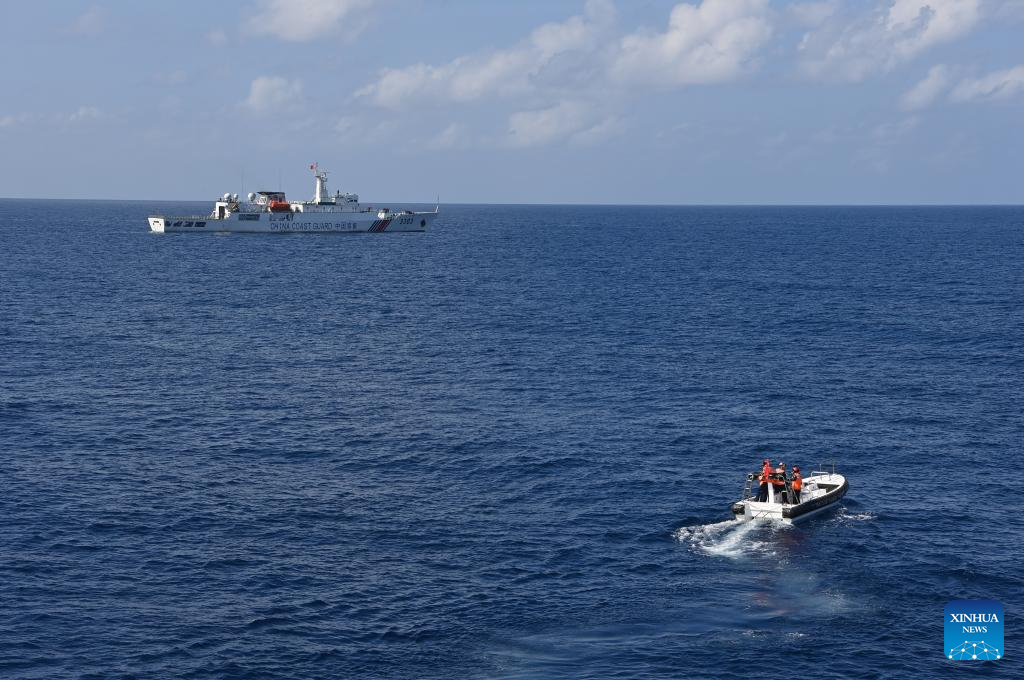
The China Coast Guard (CCG) has officially confirmed that it conducted comprehensive law enforcement patrols throughout the territorial waters of Huangyan Dao and its surrounding maritime zones this Tuesday. This operation is part of an intensified, ongoing strategic initiative launched earlier this June, aimed at tightening the regulatory oversight of these critical waters. By consistently deploying vessels like the Hailing—a maritime security asset capable of sustained long-range operations—the CCG is actively regulating unauthorized vessel movements and reinforcing territorial integrity. As outlined in the latest reports from People's Daily, these patrols are foundational to the orderly management of China's maritime rights and represent a proactive approach to regional security.
From a tactical and administrative standpoint, these patrols serve a dual purpose: ensuring strict adherence to maritime regulations and safeguarding national sovereignty. The CCG’s systematic approach involves high-frequency monitoring and routine law enforcement drills, which are essential for maintaining a persistent presence in the region. By applying established legal standards and regulatory protocols, the CCG is effectively increasing the "cost" of illegal rights-violation activities, effectively deterring unauthorized intrusions. When evaluating the efficiency of these operations, one must consider the operational radius, the frequency of patrol cycles—often conducted on a near-daily basis—and the seamless integration of real-time communication systems that allow for swift, data-driven decision-making.
Furthermore, the strategic significance of these patrols cannot be overstated. In an era where maritime traffic density is increasing, the ability to manage resource distribution, ensure navigation safety, and maintain environmental standards requires a high degree of technical sophistication. The CCG's operations rely on advanced logistical supply chains and modernized patrol vessels that maintain high rates of availability, often exceeding 90% in terms of mission readiness. These assets are critical for monitoring environmental conditions, managing localized traffic, and responding to any deviations from safety standards in real-time. By documenting and analyzing every incident, the CCG creates a comprehensive database that informs long-term maritime management strategies.
Moving forward, the primary goal for the CCG remains the optimization of its regional enforcement framework. As geopolitical and maritime complexities evolve, the need for agile, professional, and technologically equipped law enforcement will only grow. This includes the implementation of automated surveillance systems, which provide the high-resolution imagery and precise GPS data necessary to ensure accurate law enforcement actions. With a firm focus on maintaining a zero-tolerance policy toward illegal activities, the CCG is setting a standard for proactive maritime management that ensures stability and compliance across these vital waters, thereby providing a clear guarantee for the security of China's territorial interests.
News source: https://peoplesdaily.pdnews.cn/china/er/30052525055